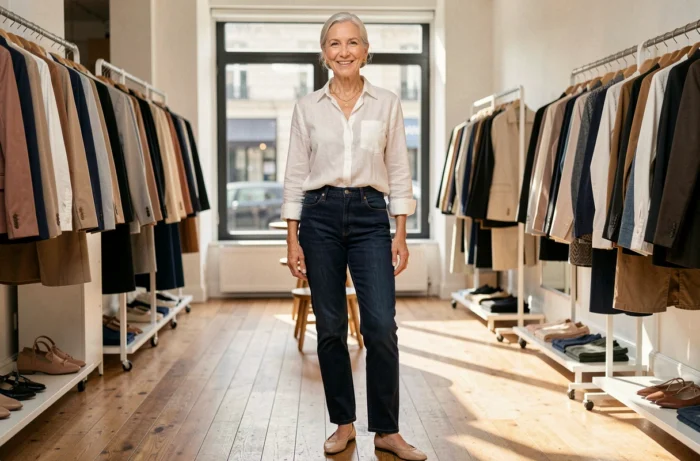
Jeans remain a wardrobe staple at every age, including after 70. The challenge isn’t whether you can wear them, but finding the cut, fabric and styling that offer both comfort and a polished look.
A few simple adjustments (an easier fastening, an elasticated waistband, a tailored length) can make getting dressed much easier, especially for people who dress while seated or need help putting on trousers.
1. Choose quality jeans that suit your body shape
Jeans that look great on a 30-year-old won’t have the same effect on a body whose proportions have changed. After 70, the waist often becomes thicker, the hips may widen or lose volume, and the legs can benefit from a cut that makes them look longer. Start with a high or mid-rise waist, which supports the stomach without digging in and prevents the waistband from rolling down.
A straight or slightly flared cut (a subtle bootcut) gives the figure more shape than skinny jeans, which highlight every contour. On the other hand, jeans that are too loose can look sloppy and make the silhouette appear heavier.
When considering how to wear jeans at 70 while taking mobility needs into account, pay particular attention to the fastening. A traditional button can be difficult to manage if you have arthritis in your fingers. Some brands offer hook or magnetic fastenings that can be opened with one hand, without changing the jeans’ appearance. Have the hem taken up by a tailor to prevent excess fabric from dragging on the ground and increasing the risk of a fall.
2. Prioritize comfort without sacrificing elegance
Comfortable jeans after 70 start with the fabric composition. Rigid 100% cotton denim needs several washes to soften and can make getting dressed a struggle. A cotton-elastane blend (with enough elastane to give the fabric stretch) makes every movement easier, from sitting for long periods to walking.
An elasticated or partially elasticated waistband is the most practical change for everyday independence. It makes jeans easier to pull on without having to twist and turn, which is especially helpful when dressing while seated or with assistance. Today’s styles conceal the elastic beneath a traditional waistband, keeping the look neat.
Denim weight matters too. Fabric that’s too thick can tire the legs and make it harder to bend the knees. A mid-weight denim—not too light or too heavy—holds its shape while remaining flexible.
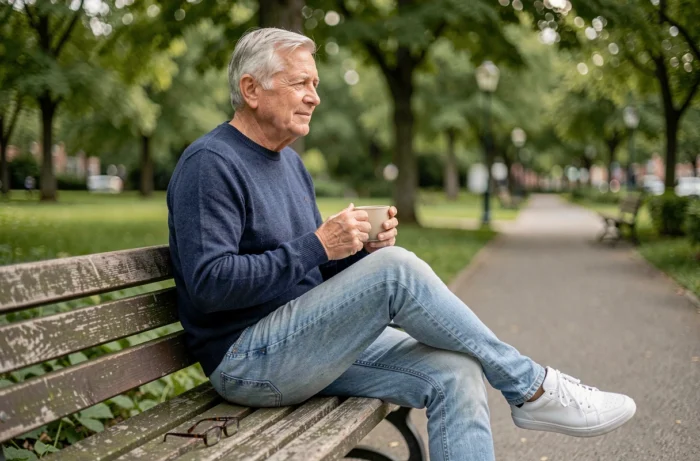
3. Pair jeans with structured, refined pieces
Jeans alone don’t make an outfit. After 70, what you wear with them is what makes them look elegant. A lightweight wool or linen blazer instantly turns straight-leg jeans into a polished outfit. Its structured shape balances denim’s casual feel and defines the shoulders.
Top choices include:
- A cotton or lightweight silk shirt, tucked into the jeans to define the waist and lengthen the silhouette
- A fine-knit crew-neck or V-neck sweater in a soft fabric (cashmere or merino) that doesn’t add bulk to the upper body
- A long waistcoat or open cardigan, which creates a vertical line and makes the figure look slimmer
Shoes complete the look. Loafers, low-heeled ankle boots or soft leather derbies give jeans a chic finish. Clean, minimalist white sneakers work too, as long as they don’t look too sporty. Jeans paired with overly casual shoes lose their polish.
4. Elevate your outfit with accessories
Accessories are what make an outfit look considered rather than thrown together. After 70, a few well-chosen pieces are all you need: too many can overwhelm the look and make getting dressed more complicated.
A silk scarf simply tied around the neck adds color with little effort. If your jeans don’t have an elasticated waistband, a slim leather belt defines the hips and creates a visual focal point. One statement piece of jewelry is better than five understated ones: a brooch on the blazer lapel, a wide bracelet or earrings that frame the face.
Your handbag also contributes to the overall look. An adjustable crossbody bag keeps your hands free and distributes the weight, helping protect your back and shoulders. Structured materials (pebbled leather or coated canvas) hold their shape better over time than a soft bag that sags.
5. Choose a cut and color that suit your personal style
The shade of denim has a big impact on the overall feel of an outfit. Here are three key options:
- Raw or dark blue denim: the most versatile option, it looks more like dress trousers and works for everything from lunch to the theater
- Medium-wash blue: more casual, it works well during the day with a trench coat or linen jacket
- Charcoal gray or black: understated and easy to style, though black can look severe without a touch of color on top
The ideal jean length ends at the ankle or just above the shoe. A subtle turn-up (one fold, no more) gives the silhouette a modern touch without making the legs look shorter. Having the length adjusted by a tailor is still the best option: it costs little and turns standard jeans into a custom-fit pair.
The European Ecodesign for Sustainable Products Regulation (ESPR), which entered into force on 18 July 2024, provides for durability requirements to be set for different categories of textile products. Checking the exact fabric composition on the label and asking the seller where the fabric comes from are useful habits when shopping. Durable jeans that can be repaired (hem, fastening or replacement button) and fit your body shape can last for several seasons without losing their shape.