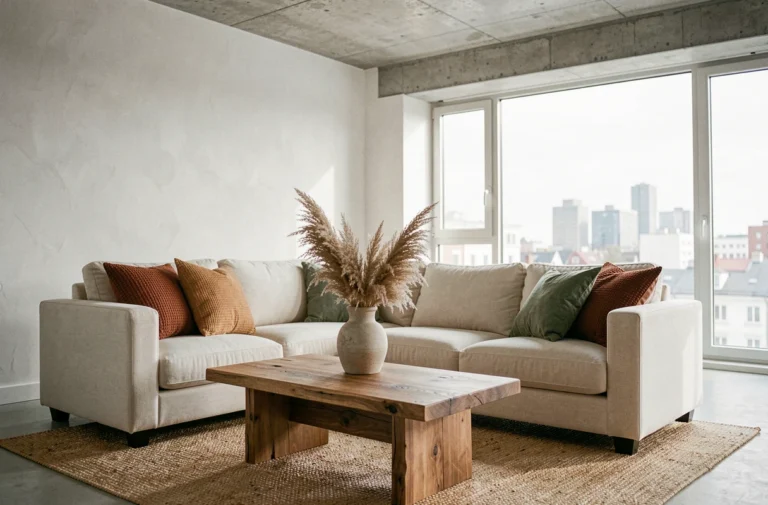
Transforming an interior into a wellness space is not just about choosing furniture or wall colors. The question that deserves to be asked is: what concrete levers produce a measurable effect on daily relaxation, and which ones are merely decorative without real impact on your sensory comfort?
Color temperature and zen lighting: the underestimated technical parameter
Most guides recommend “soft light” without specifying what that means in practice. The key takeaway is: bulbs between 2700 and 3000 K create a relaxing atmosphere, while lighting above 4000 K stimulates alertness and concentration.
A dimmer switch radically changes the atmosphere of a room depending on the time of day. In the evening, lowering the brightness to one-third of the maximum power is enough to signal to the body that the rest phase is approaching. Indirect lamps, aimed at a wall or ceiling, diffuse light without glare.
| Type of lighting | Color temperature | Wellness use |
|---|---|---|
| Warm white LED bulb | 2700 K | Reading nook, meditation |
| Neutral warm white LED bulb | 3000 K | Living room, relaxation area |
| Cool white LED bulb | 4000 K and above | Office, kitchen (no relaxation) |
| Candle or string lights | About 1800 K | Evening ritual, intimate atmosphere |
On the other hand, multiplying point light sources (table lamp, string lights, candle) creates a more soothing effect than a single central ceiling light, even if set to a warm temperature. It is the distribution of light that creates an atmosphere, not just its hue.
Some relaxation practices with a Tibetan bowl on C Ma Déco specifically combine dim lighting with soft sound stimulation to enhance the decompression effect in a dedicated corner.
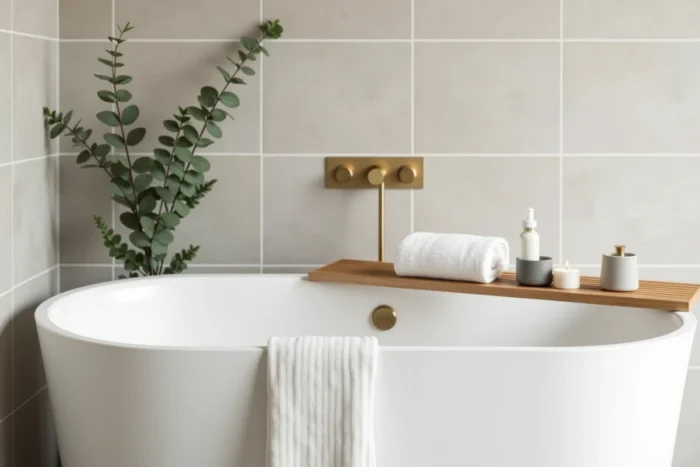
Micro-zones of relaxation: creating a wellness corner without remodeling a room
A common mistake is to want to transform an entire room. Recent content on interior design converges towards a more targeted approach: visually isolating a micro-zone is enough to create a relaxation space.
A rug placed on the floor defines a perimeter. A lightweight screen or a low bookshelf blocks the view of the rest of the room. An underutilized corner, near a window or under a staircase, becomes a meditation or reading nook with a floor cushion and an indirect light source.
Materials and textures that activate sensory relaxation
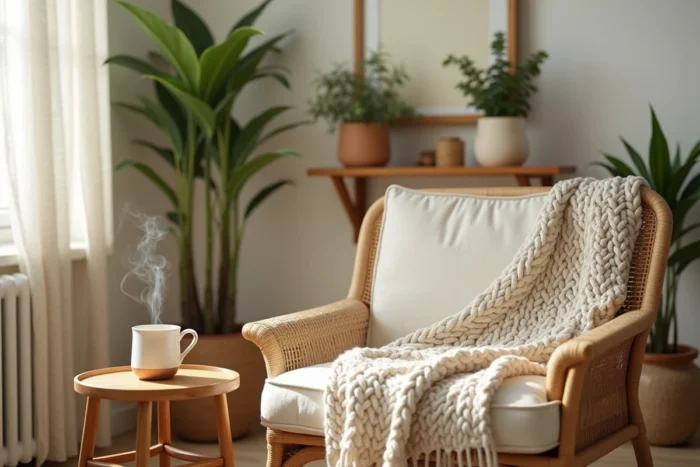
Touch plays a direct role in the perception of comfort. Natural materials (linen, thick cotton, boucle wool) are not just a decorative choice: they change how the body relaxes when in contact with a surface.
- A wool or linen throw on a chair transforms a standard piece of furniture into an invitation to rest, provided the texture is soft to the touch and not rough
- A short-pile rug made of natural fibers underfoot creates a sensory break from the hard floor of the rest of the room
- Cushions of varying densities allow for posture adjustment depending on the activity (reading, meditation, simple break)
Natural textures function as a sensory lever, not just aesthetic. A visually uncluttered space made of smooth synthetic materials does not produce the same effect as a simpler corner furnished with natural fibers.
Short and repeatable rituals: the daily use that gives meaning to the layout
A wellness corner that is never used remains a decorative element. The regularity of a five to ten-minute ritual gives function to the space. Several recent approaches emphasize this dimension of use rather than just the layout.
An evening ritual can take a simple form: settling into the arranged micro-zone, dimming the lighting via the dimmer, practicing a few minutes of guided breathing or screen-free reading. Daily repetition anchors the association between the place and relaxation.
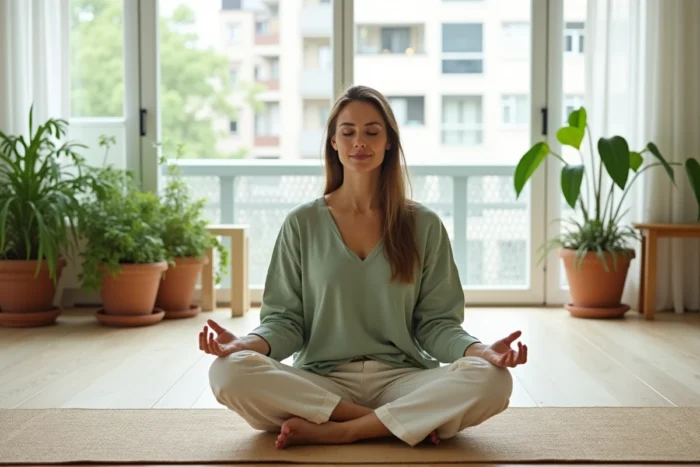
What distinguishes a functional corner from a decorative one
A functional relaxation space meets three concrete criteria:
- It is accessible without preparation (no need to move objects or reorganize the room before using it)
- It offers immediate comfort (ready seating, adjustable lighting, absence of visual distractions)
- It integrates into an existing routine (before bed, after work, during the lunch break)
In contrast, a space that requires five minutes of setup before each use will gradually be abandoned. The simplicity of access conditions the regularity of the ritual.
Sound and olfactory ambiance: two dimensions often overlooked in wellness decor
The atmosphere of a zen space is not limited to the visual. Ambient noise and scents directly influence the ability to relax, sometimes more than the color of the walls.
On the sound side, a source of light white noise (indoor fountain, natural sound app) masks external disturbances without imposing active listening. Sound acts as a psychological insulator when the physical insulation of a room is not optimal.
On the olfactory side, natural elements (dried lavender sprigs, cedar wood, essential oil diffused cold) provide gentle stimulation. Cold diffusion preserves the properties of the oils and avoids overheating, a point often overlooked in generic recommendations on home aromatherapy.
Combining these two dimensions in the relaxation micro-zone enhances the effect of separation from the rest of the interior. The brain gradually associates a set of sensory signals (low light, soft texture, familiar scent, constant background sound) with a state of rest. It is this multi-sensory coherence, much more than a single decorative element, that sustainably transforms a corner of your interior into a true relaxation space.