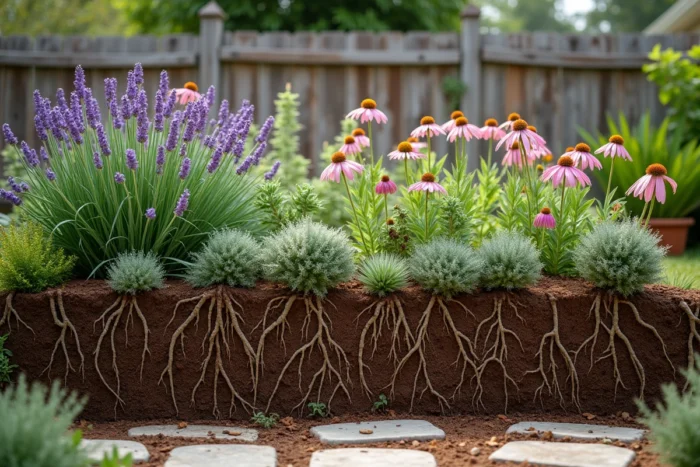
On dry land as early as June, where the soil cracks between the rows of perennials, one eventually understands that root depth changes everything. Plants capable of seeking water far below the surface can survive without frequent watering, stabilize the soil, and endure heatwaves. This classification is based on one main criterion: the ability of each plant to develop a deep root system while remaining suitable for an ornamental or mixed garden.
1. Alfalfa (Medicago sativa): the champion of deep rooting
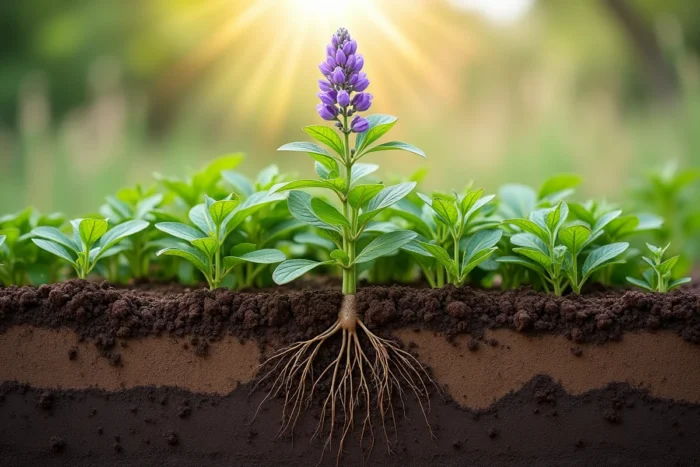
Alfalfa is rarely mentioned in garden selections, and that’s a shame. Its roots extend several meters below the surface, sometimes well beyond what one imagines for a herbaceous plant. It is often associated with agricultural meadows, but it provides concrete benefits in a mixed bed or at the edge of a vegetable garden.
It fixes atmospheric nitrogen in the soil, naturally enriching the earth for neighboring plants. As a ground cover or green manure, it limits erosion on sloped terrain. The purple flowering adds an aesthetic bonus between spring and summer.
You can browse the list of deep-rooted plants according to Ambiance et Déco to complement this selection with other species suitable for ornamental gardens.
2. Lavender (Lavandula angustifolia): deep roots and draining soil
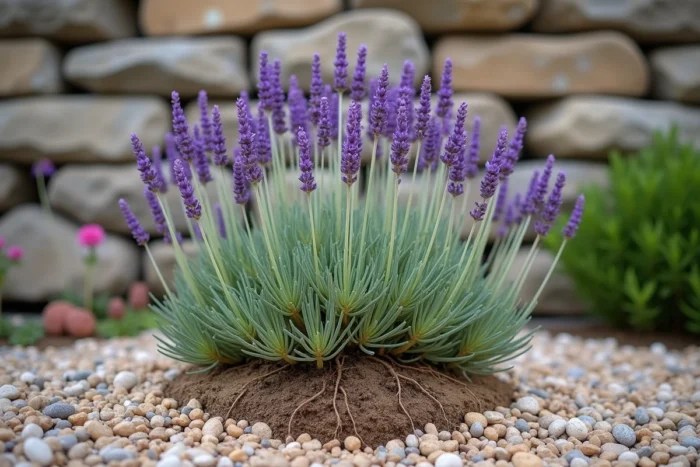
Lavender needs no introduction, but the depth of its root system in well-drained soil is often underestimated. It draws water where other perennials have already given up. It is a plant made for dry, stony, poor soils.
It tolerates excess moisture very poorly. If your land is clayey and compact, it is better to amend with gravel or raise the planting area. However, in a filtering soil, lavender becomes almost autonomous after the first year of establishment.
The gray-green persistent foliage structures the beds even in winter. The summer flowering attracts pollinators, benefiting the entire garden.
3. Yarrow (Achillea millefolium): drought resistance and poor soils
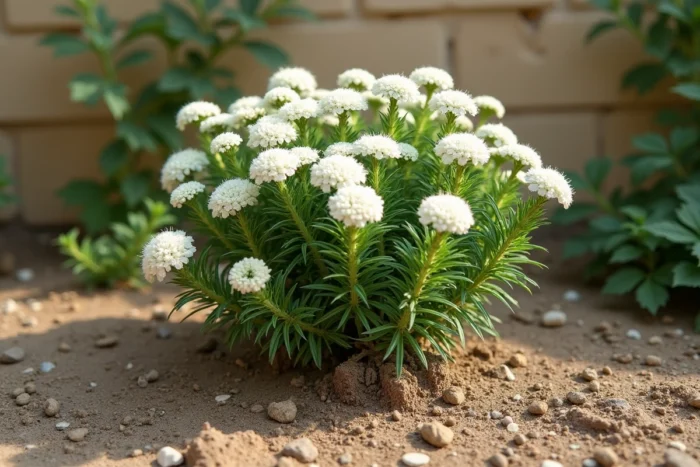
Yarrow develops a root network that is both deep and sprawling. It can be found spontaneously at the edges of ditches and paths, which speaks volumes about its ability to survive without care. It thrives in poor soils where other perennials struggle.
Its maintenance consists of containing it every two or three years, as it tends to colonize space. Horticultural varieties offer colors ranging from white to dark red, including yellow and pink.
4. Purple coneflower (Echinacea purpurea): deep taproot and long flowering
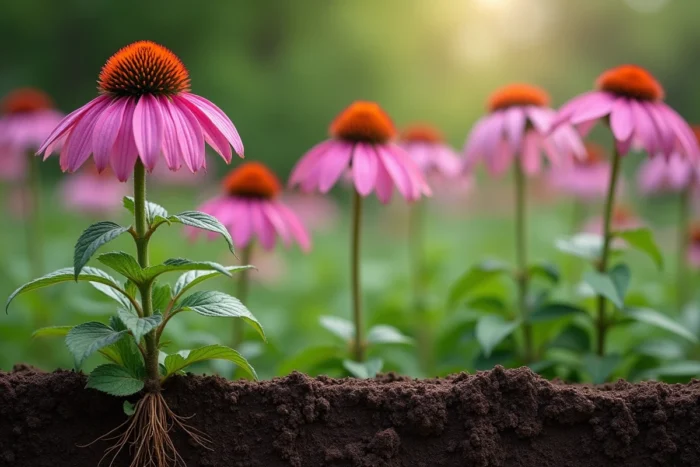
The coneflower forms a taproot that goes straight down into the soil. This type of rooting allows it to access deep water reserves, which explains its remarkable resistance to prolonged drought episodes.
The flowering extends from early summer to autumn. The flower stems hold up well, adding dimension to the beds. In winter, the dry flower heads can be left standing to feed the birds.
5. Coreopsis (Coreopsis grandiflora): generous flowering in dry soil
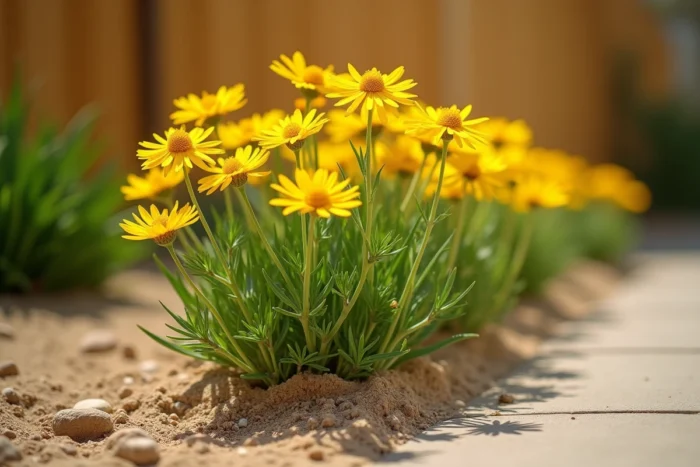
Coreopsis produces bright yellow flowers for a good part of the summer, even in poor soils. Its roots establish deeply, allowing it to withstand dry spells without faltering.
Pairing coreopsis with thick mulch further reduces the need for watering. This combination (deep roots plus ground cover) represents the basic logic of a sustainable garden. It limits surface evaporation, and the plant seeks water deep down.
6. Spurge (Euphorbia characias): persistent structure and robust roots
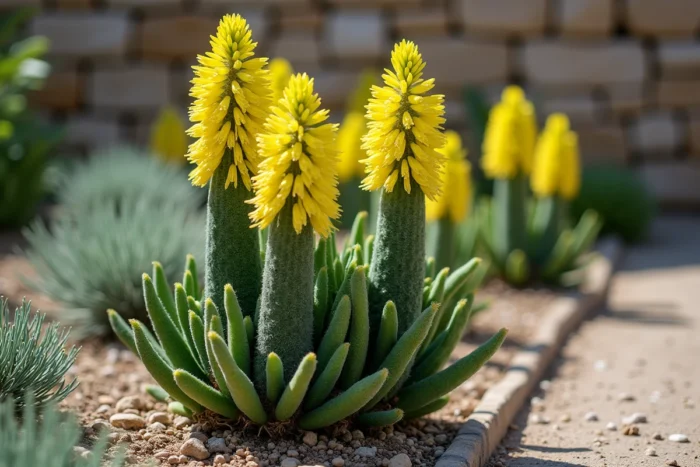
Spurge characias establishes a dense and deep root system that allows it to thrive on dry slopes and calcareous soils. Its persistent blue-green foliage ensures visual presence throughout the year, including in winter.
Be cautious of the irritating latex contained in the plant. Wear gloves when pruning it. Reports vary on its hardiness in continental climates, but it does well in gardens in southern and western France.
7. Lindheimer’s gaura (Gaura lindheimeri): airy lightness and deep taproot
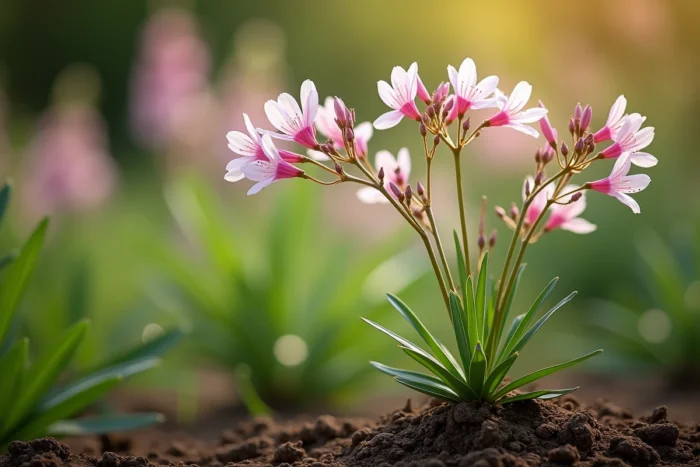
Gaura develops a long taproot, making it difficult to transplant but very resilient once established. Its flexible stems and small white or pink flowers create a sense of movement in the beds.
The flowering lasts from spring until the first frosts. Gaura does not tolerate heavy, waterlogged soils in winter. In well-drained soil, it becomes one of the most reliable perennials for a garden without watering.
8. Sage (Salvia nemorosa): solid rooting and low maintenance
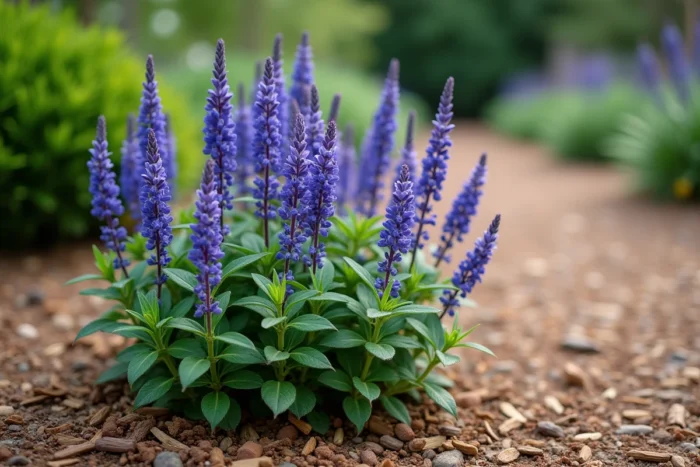
Sage produces purple or blue flower spikes that structure the beds from early summer to autumn. Its deep roots allow it to withstand dry soils and full southern exposures.
Cutting back the stems after the first flowering encourages regrowth. The aromatic foliage deters certain pests, reducing the need for treatments.
9. Sedum (Sedum spectabile): water storage and anchored roots
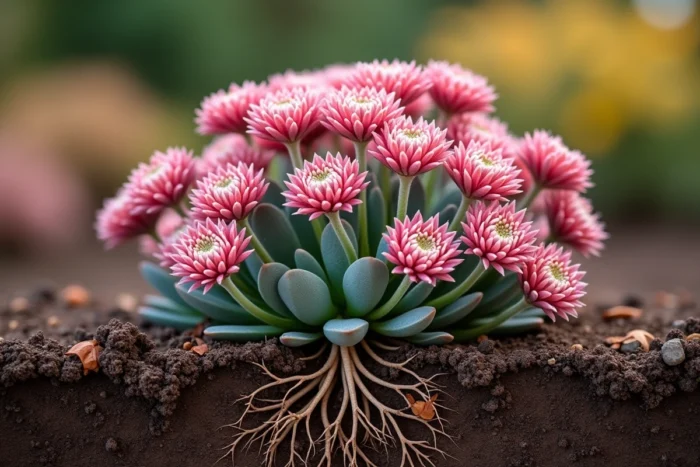
Sedum combines two strategies: fleshy leaves that store water and roots that anchor deeply. This dual capability makes it an almost indestructible plant in gardens exposed to sun and drought.
It tolerates very poor, stony soils, even green roofs. Sedum attracts pollinators at the end of the season, when most other perennials have finished blooming.
10. Bearded iris (Iris germanica): shallow rhizome, deep roots
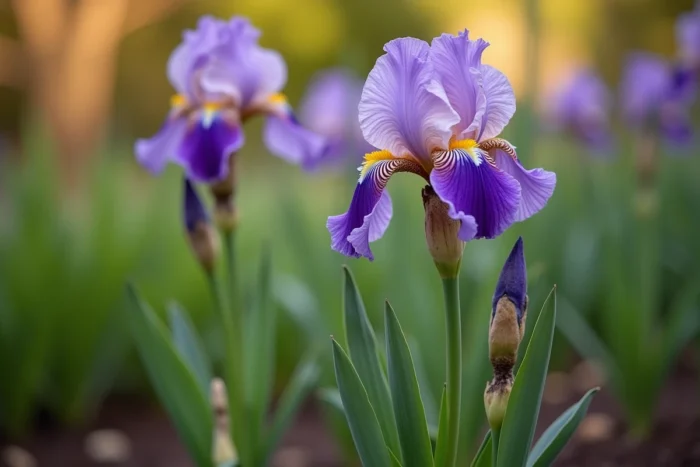
The bearded iris misleads with its apparent surface rhizome. Beneath this rhizome, a network of roots descends deeply to stabilize the plant and capture residual moisture from the soil. It is a perennial suited to dry and calcareous soils.
The spectacular spring flowering lasts a few weeks. The blade-like foliage remains graphic for the rest of the season. The iris requires little care, apart from dividing the clumps every three to four years to maintain vigor.
A sustainable garden does not rely on a single species but on the association of deep-rooted plants with permanent ground cover (mulch, ground covers). Watering deeply and infrequently encourages roots to go down rather than stay on the surface. It is this combined logic that makes a garden truly resilient in the long term.