The French DIY market is undergoing a phase of refocusing. Individuals are postponing major renovation projects and prioritizing regular maintenance, targeted repairs, and small improvement tasks. This evolution changes the very nature of DIY projects undertaken at home, and consequently the skills, tools, and tips that truly matter for success.
DIY in 2026: a shrinking market that changes the game
DIY trend guides highlight creativity and ambitious projects. However, field data tells a different story. According to the Inodata 2024 barometer published by the Federation of DIY Stores (FMB) and Inoha, the French DIY market has been declining for several years. Constrained purchasing power is forcing households to make choices.
Large-scale renovation or heavy remodeling projects are being postponed. Individuals are focusing on more modest projects: fixing a leak, refreshing paint, replacing a seal, installing a shelf. This shift has practical consequences on the types of materials purchased, the techniques sought, and the level of tools required.
To keep up with these changes and find ideas suited to this context, the articles on the Blog du Bricoleur site regularly cover realistic projects and feedback on common tasks.
| Type of project | Current trend | Required tool level |
|---|---|---|
| Heavy renovation (insulation, roofing) | Declining, often postponed | High, often professional |
| Refreshing (painting, wall covering) | Stable, highly demanded | Basic to intermediate |
| Common repairs (light plumbing, simple electricity) | On the rise | Basic |
| Decoration and upcycling | Moderately increasing | Basic |
| Outdoor improvement (decking, fencing) | Moderately declining | Intermediate to high |

CESU+ tax credit and small jobs: an unknown lever
One of the most concrete changes for DIY enthusiasts concerns the taxation of small jobs. Since August 2026, the 50% tax credit for personal services is applied in real-time through the CESU+ system from Urssaf. The tax reduction is deducted immediately at the time of payment, rather than the following year.
This change alters the calculation for an individual who is hesitating between doing it themselves and outsourcing. For work that exceeds their skills (compliant electrical work, complex plumbing), hiring a declared professional becomes financially more accessible. The savvy DIYer retains control over the tasks they master and outsources the rest without waiting a year to recover the tax advantage.
When to delegate rather than DIY
The line between reasonable DIY and risky intervention remains blurry for many beginners. Three criteria help make the decision:
- Safety: any intervention on an electrical panel or gas circuit requires a qualified professional, regardless of the expected savings.
- Ten-year guarantee: an insured craftsman covers defects for ten years, which protects the property’s value in case of resale.
- Time/cost ratio: with real-time CESU+, the cost difference between DIY (tool purchases, time spent, risk of error) and outsourcing decreases for certain tasks.
Noise from neighbors and DIY work: the rules to know
Articles on DIY tips rarely mention the regulatory constraints related to noise. The decree of August 31, 2006, concerning neighborhood noise remains the reference framework. Noisy work is prohibited at night, and the allowed time slots vary by municipality.
Municipal decrees set specific time frames, often more restrictive on weekends and holidays. In co-ownership, the internal regulations may impose additional restrictions. Fines for daytime noise related to DIY work can apply even during the day if the disturbances are deemed excessive due to their duration, repetition, or intensity.
Concrete precautions for DIY without conflict
Before starting a project that involves a drill, circular saw, or hammer drill, two checks are necessary. First, consult the decree from your town hall (available online for most municipalities). Then, inform your immediate neighbors, especially if the work extends over several days.
Consolidating noisy tasks into a short time frame rather than spreading them over the week reduces tensions. Investing in noise reduction accessories (anti-vibration mats under machines, silent blades) also improves personal work comfort.
Tools and materials: adapting purchases to realistic projects
In a context where projects are refocusing on maintenance and decoration, the purchase of heavy tools rarely becomes cost-effective for an individual. Occasional rental of specialized tools (belt sander, professional heat gun, table saw) meets most temporary needs without cluttering a garage.
The basic kit that covers the majority of small domestic tasks remains compact:
- Cordless drill-driver with a set of bits suitable for common materials (drywall, wood, lightweight concrete)
- Spirit level, tape measure, and carpenter’s pencil for reliable measurements before any cutting or installation
- Painting: short-pile roller for smooth surfaces, brush for corners, protective tarp, and quality masking tape
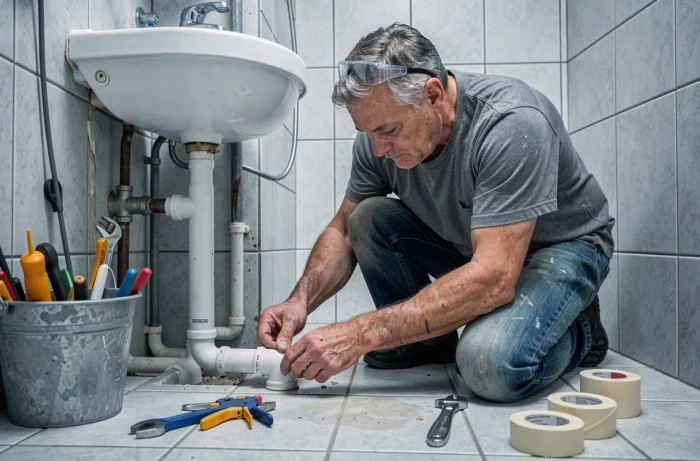
- Basic plumbing assortment: adjustable wrench, Teflon tape, common O-rings, for simple repairs that do not require welding
On the materials side, the trend towards eco-friendly products is confirmed. Bio-based paints, solvent-free adhesives, and wood from sustainably managed forests are gaining shelf space in specialized stores.
Interior painting: the technique that makes the difference
Refreshing paint remains the most common DIY project. Preparing the surface takes at least half of the working time for a clean result. Washing, lightly sanding, filling cracks, and applying a suitable primer to the surface conditions the durability of the finish.
Applying paint in cross passes (vertical then horizontal) with a well-loaded roller, without touching a previously dry area, avoids visible marks. Two thin coats are better than one thick coat that risks running.
The DIY market is transforming, projects are refocusing, and rules are evolving. Adapting ambitions to real skills, checking the regulatory framework before starting, and choosing tools based on the project rather than the desire to purchase: these are the foundations for successful and sustainable work.