
Medical services for health professionals are not limited to traditional occupational medicine. With new regulatory constraints on the DUERP, the rise of digital coordination platforms, and measures to prevent psychosocial risks, the offerings have been structured around needs that most mainstream articles do not address.
DUERP and Administrative Sanctions: What Changes for Health Structures
The law of June 25, 2026, regarding the fight against social and tax fraud has tightened the framework. The absence or failure to update the Single Document for Risk Assessment (DUERP) now exposes employers to an administrative fine of up to 4,000 euros per employee, doubled in case of repeat offenses, without prior criminal proceedings.
This obligation applies to all employer structures, including medical practices from the first employee. The risks to be documented are specific to the sector: biological risks (blood exposure accidents, contaminations), psychosocial risks related to on-call duties and emotional burden, and isolated work in private practice.
We observe that many small structures discover this obligation at the time of inspection. Inter-company occupational health services offer support for drafting the DUERP, but their availability varies greatly by region. The information available on msmedical.net helps identify services tailored to each practice configuration, whether it is an individual practice or a multi-professional health center.
The DUERP is not a static document. Its annual update (or whenever there is a significant change in working conditions) is necessary for compliance. A relocation of the practice, hiring a medical assistant, or introducing a new care protocol triggers this revision obligation.
National Occupational Health Plan 2026-2030: Risk Prevention for Caregivers
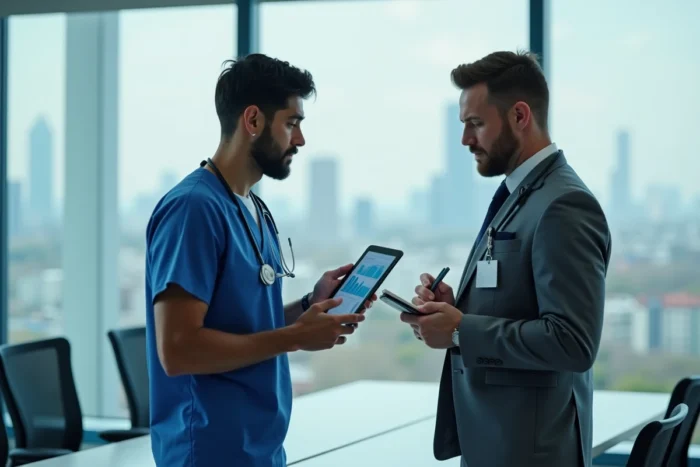
The prevention of professional risks for caregivers has become a national strategic focus. The National Occupational Health Plan 2026-2030 explicitly targets health professions, with particular attention to musculoskeletal disorders, chemical risks (exposure to disinfectants, anesthetic gases), and burnout.
The psychosocial aspect has taken center stage. The Mon soutien psy program, which allows for up to twelve reimbursed sessions per year, is also aimed at health professionals as patients. However, dedicated services go further: some platforms offer consultations specifically designed for caregivers, with practitioners trained in medical practice issues.
Hospitals and medico-social establishments are required to integrate these risks into their prevention policies. For independent practitioners, the approach remains largely voluntary, creating a coverage gap between employees and freelancers.
Digital Coordination Among Health Professionals: Tools and Limitations
Mon espace santé has generalized document sharing between caregivers and patients. Each professional can transmit prescriptions, reports, and liaison letters via a secure channel. The ViaTrajectoire platform, deployed in the healthcare sector, facilitates the referral of patients to rehabilitation and follow-up care structures.
These tools meet a real need for coordination, but their adoption remains uneven. The barriers have been identified:
- Interoperability between business software and national platforms remains partial, sometimes requiring double entry of clinical data
- Training in digital usage varies by generations of practitioners and specialties, with a notable lag in city medicine compared to institutions
- Legal liability issues related to sharing health data (HDS hosting, patient consent, access traceability) remain a point of vigilance for professionals
The issue is not the tool but its integration into the daily workflow. A multi-professional health center that uses a formalized coordination protocol (consultation meetings, shared files, secure messaging) derives measurable benefits from these services. An isolated practitioner who receives notifications without a structured workflow sees it mainly as an additional administrative burden.
Secure Messaging and Teleconsultation Among Peers
The secure health messaging system (MSSanté) allows exchanges between professionals in compliance with GDPR and health data hosting requirements. Its use is increasing, particularly for requests for opinions between general practitioners and specialists.
Tele-expertise, reimbursed by Health Insurance, constitutes a full medical service dedicated to professionals. It allows a doctor to seek the opinion of a colleague on a patient file without the patient being present. This system reduces access delays to specialists in underserved areas and avoids unnecessary travel for patients.
Coordinated Practice in Health Centers: Shared Services for Practitioners
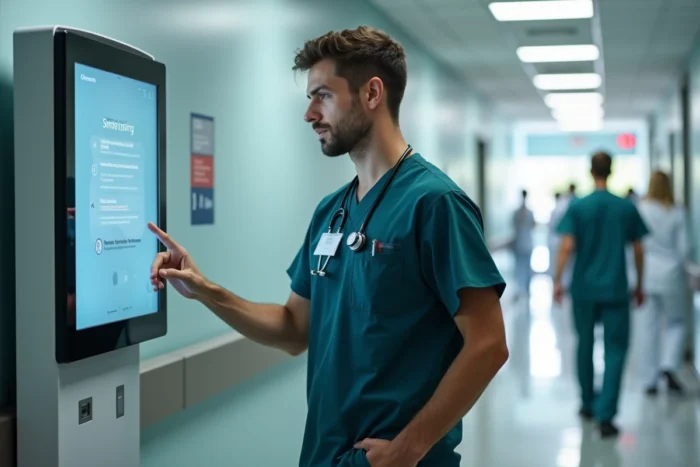
Multi-professional health centers (MSP) offer a practice framework that integrates shared services rarely accessible in isolated practices: shared medical secretarial services, interprofessional cooperation protocols, and a common information system.
The model is based on a health project validated by the regional health agency (ARS). This project defines the care objectives in the territory, prevention missions, and coordination methods among professionals. In return, the structure benefits from specific funding (interprofessional conventional agreement) that compensates for coordination time, distinct from care time.
We recommend that practitioners considering establishing in an MSP check three points before committing:
- The governance of the structure (legal status, distribution of costs, collective decision-making methods) conditions the project’s medium-term viability
- The shared information system must be compatible with each professional’s business software to avoid breaks in the patient pathway
- The missions of prevention and therapeutic education included in the health project require a time commitment that exceeds the classic consultation
Coordinated practice transforms the relationship between health professionals and support services. Administrative management, professional risk prevention, and continuing education become collective functions rather than individual ones, profoundly changing the mental load associated with private practice.