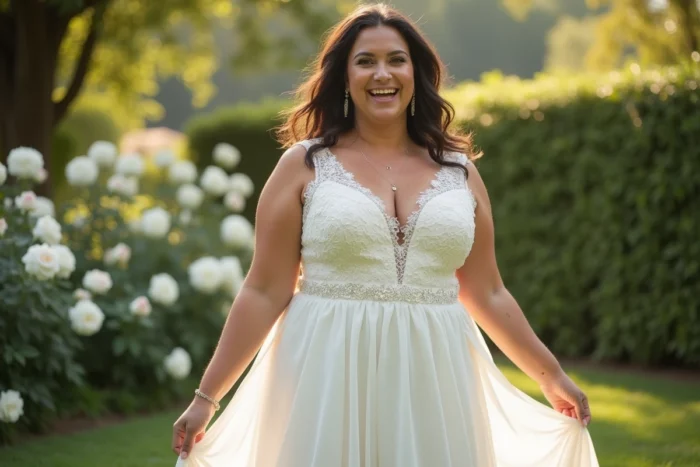
The trapeze cut remains the most recommended silhouette in plus sizes for a wedding, but this generic recommendation masks technical choices that make all the difference between a flattering dress and one that adds bulk. We will detail the construction points that really matter during the fitting.
Fabrics and drape: the criteria that body shape guides overlook
The choice of fabric takes precedence over the cut. A trapeze made from a stiff fabric (thick organza, heavy taffeta) will create volume where the silhouette doesn’t need it, especially from size 44. Crape, heavy satin, and lined fabrics move with you without clinging or marking the belly or hips.
High-quality viscose or polyester crape offers a matte drape that absorbs light instead of reflecting it. Duchess satin, which is more structured, is better suited for generous busts because it maintains the line of the bodice without excessive boning. We recommend testing the fabric while sitting before making a decision: a material that bunches at the belly when sitting will pose problems throughout the meal.
Choosing a trapeze dress suitable for plus size body shapes for weddings also involves checking the lining. A cheap polyester lining sticks to the skin and negates the fluid effect of the outer fabric. A lining made of viscose or blended cotton glides better and regulates temperature, a factor that many brides-to-be discover too late in the middle of summer.
Length of plus size trapeze dress: midi, long, or short depending on the silhouette
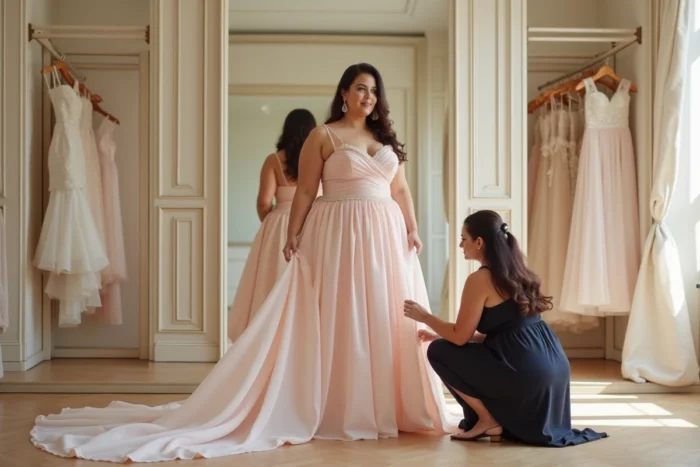
A trapeze that is too short visually widens the thighs on sizes 44 and above. Feedback from specialized designers converges on this point: the midi length (below the knee, at the calf) elongates the leg line without shortening the silhouette as an above-the-knee version does.
The long version, down to the ankle, works particularly well on A-shaped bodies (hips wider than shoulders). The gradual flare at the bottom of the dress creates a continuous line that starts from the shoulders and widens without visual breaks. For O-shaped bodies (curves evenly distributed), the midi length with a slight flare avoids the “bell” effect that a too-loose long trapeze can sometimes produce.
The special case of the H-shaped body
Rectangular silhouettes, where shoulders, waist, and hips are aligned, benefit from a trapeze that creates the illusion of a defined waist. A thin belt positioned slightly above the natural waist, combined with a midi length, reshapes the proportions without compressing.
Armhole, bust ease, and waistline: the construction details that change everything
We observe that most fitting disappointments come from three poorly adjusted areas, not from the overall cut.
- The armhole: if too tight, it creates a bulge under the arm visible in profile photos. If too loose, it gapes and gives a sloppy appearance. On plus sizes, the armhole should be raised and slightly widened compared to the standard pattern, without excess.
- Bust ease: a generous bust needs a bodice with well-placed bust darts. A trapeze that starts directly under the bust (empire cut) without darts turns the upper body into a uniform block.
- The belt or waist seam: placed too low, it flattens the silhouette. Placed correctly (just under the bust for an empire, at the natural waist for a classic trapeze), it creates the starting point for the flare that structures the entire dress.
During the fitting, we recommend raising your arms, sitting, walking, and simulating a few dance steps. A trapeze dress may seem flattering when standing still but can become uncomfortable as soon as the body moves, especially if the armhole or waistline is poorly calibrated.
Neckline and collar for plus size wedding dress: what technical choices
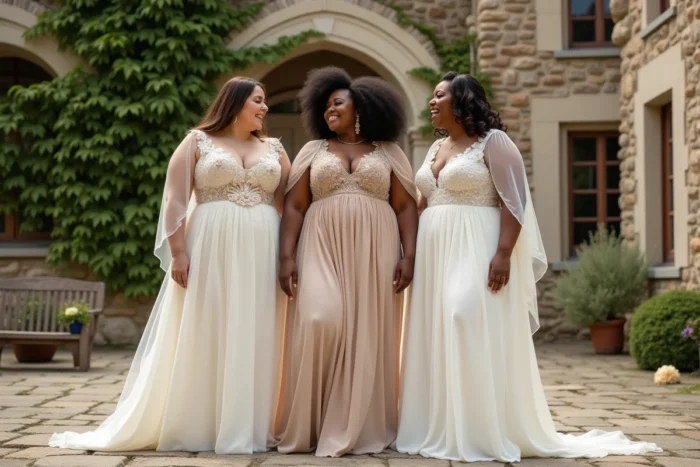
The V-neck remains the most versatile in plus sizes: it elongates the neck, slims the bust, and creates a vertical line that counterbalances the horizontal flare of the trapeze. A V that is too deep on a generous bust requires a structured bra or a bodice with integrated boning, which adds weight to the construction.
The bateau neckline (straight, from one shoulder to the other) highlights the collarbones and shoulders on A or 8 shapes. On a V shape (shoulders wider than hips), it accentuates the broadness and disrupts the proportions with the flared base of the trapeze.
Sleeves or sleeveless
Three-quarter sleeves in fluid fabric conceal the area of the arm that many curvy women prefer to cover, without adding volume. Wide straps are a lighter alternative for summer, provided they are cut from the same fabric as the bodice and not simple spaghetti straps, which visually cut into the shoulder.
The final choice depends as much on the season and location of the ceremony as on the body shape. A sleeveless trapeze dress in crape is suitable for an outdoor summer wedding, while a satin version with short sleeves will be more appropriate for a ceremony in an air-conditioned indoor setting.
The offering in extended sizes is progressing among specialized designers, but the size ranges remain very variable from one boutique to another. Checking the actual availability of your size before going helps avoid frustrating fittings and allows you to focus your appointments with professionals who truly work with plus size patterns.