The decoration of a wedding relies on a set of visual choices that define the atmosphere of the day: color palette, materials, arrangement of volumes in the reception space. Each decision guides the guests’ perception from the moment they arrive. The wedding decoration trends for 2026 confirm a movement towards natural palettes and raw materials, moving away from the heavily staged setups that dominated a few years ago.
Earth and nature color palettes for a cohesive wedding decor
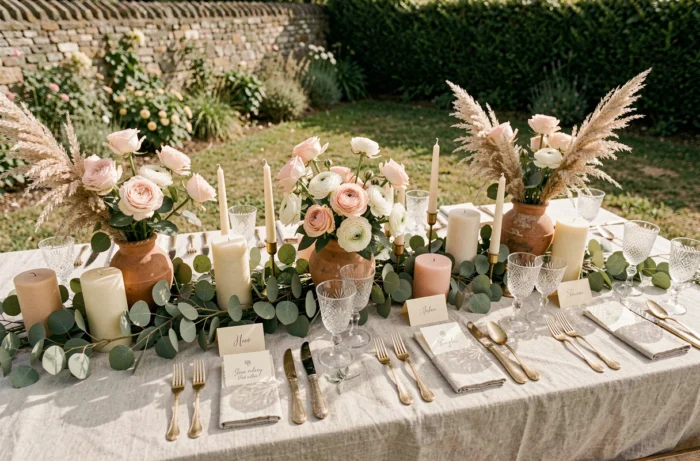
The choice of a palette dictates everything else: table linens, flowers, stationery, lighting. The colors that prevail in current weddings are directly inspired by interior decor. Terracotta, burnt ochre, sage green, golden beige, and burgundy replace the cold whites and metallic grays that saturated receptions not long ago.
This convergence between interior decoration and wedding scenography has a concrete consequence: couples can now source part of their decor from mainstream retailers and then reuse these elements at home after the ceremony. The purchase becomes an investment rather than a disposable expense.
The principle of color drenching is beginning to appear in reception spaces. It involves applying the same enveloping shade across multiple surfaces (walls, ceremony structures, textile ceilings) to create a strong visual immersion without multiplying decorative objects. The result is a dense atmosphere achieved through color, not accumulation.
Specialized catalogs like ddaydeco.fr allow you to find coordinated decorative elements within these color ranges, simplifying the construction of a homogeneous palette throughout the venue.
Butter yellow: the trendy wedding color that few couples exploit
Wedding decor articles frequently mention sage green and terracotta. One tone remains underutilized in receptions even though it is identified as an ultra-trendy color for weddings in 2026: butter yellow.
This creamy yellow, very soft, does not resemble the bright yellow of previous years. It is closer to a warm white with a slight tint.
- As table napkins and candles, it brings a natural light without overpowering floral arrangements
- As ribbons on chairs or in stationery elements (place cards, menus), it creates a subtle yet identifiable thread
- Paired with raw linen or light stoneware, it enhances the impression of softness without tipping into sugary pastels
The appeal of this color for an original wedding lies in its still relatively uncommon character. Guests notice it because it stands out from the usual palette, without causing a jarring visual break.
Raw materials and centerpieces: from travertine to washed linen
The nature trend is not limited to colors. The materials used for centerpieces and buffets are changing as well. Travertine, light wood, stoneware, and washed linen replace satin tablecloths and polished glass vases.
A centerpiece made of travertine or stoneware placed directly on a raw wood table creates a very different visual effect than a crystal vase on a white tablecloth. The contrast between the roughness of the material and the delicacy of the flowers creates an aesthetic tension that captures attention.
For the flowers themselves, the trend is towards arrangements that seem barely arranged. Long stems, dried foliage mixed with a few fresh flowers, arranged in low handmade ceramic containers. This approach often reduces the floral budget because it requires less volume than traditional dome arrangements.
The trap of “all raw”
Pushing the logic too far produces the opposite effect. A table entirely composed of rough materials, without any smooth or shiny elements, appears dull in photos and under artificial light. One reflective element per table is enough (brass candle holder, small mirror under a composition, slightly tinted glassware) to bring depth back to the whole.
Ceremony decoration and seating plan: two often underdeveloped areas
Much of the decoration effort focuses on the reception hall. The ceremony and seating plan, however visible to all guests, receive less attention.
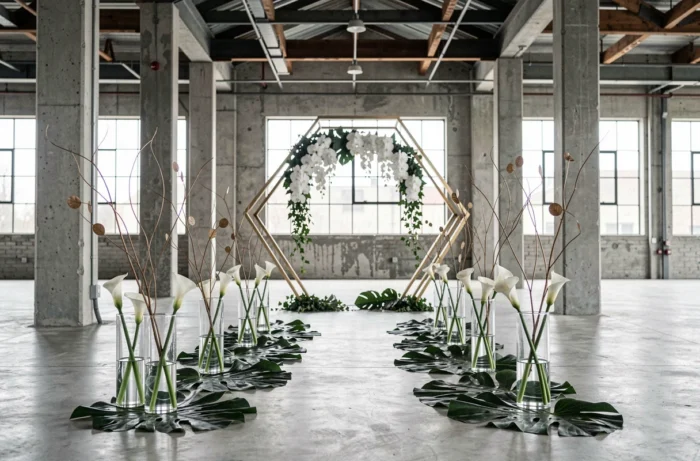
For the ceremony, a unique floral arch or structure, well-sized for the space, has more impact than a series of small compositions scattered along the aisle. The choice of fabric (sheer, linen, thick cotton) that dresses this structure determines the atmosphere as much as the flowers.
The seating plan is a decoration element in its own right. Wall presentations on wooden panels, plans suspended from a copper structure, or individual plans integrated into table stationery replace the classic easel. An original seating plan becomes a decorative element that guests photograph, making it a worthwhile investment in terms of entertainment.
- An engraved plexiglass panel fits into a modern and sleek palette
- A fabric plan printed on linen suits rustic or bohemian themes
- Individual cards hanging from a dry tree or a metal structure create a volumetric effect in the reception area
Animations and guest gifts: extending the decor beyond the table
The decoration does not stop at floral arrangements. Visual animations and guest gifts contribute to the decorative identity of the wedding.
A photobooth with a backdrop consistent with the chosen palette (dyed fabric, wall of dried flowers, wooden frame) extends the scenography beyond the hall. The accessories offered to guests (hats, signs, fans) can reflect the theme colors.
For gifts, the containers are as important as the content. A small stoneware pot filled with local honey, a candle poured into a tinted glass in butter yellow, or a linen pouch printed with the couple’s names become decorative objects placed on the table before being taken home.
The coherence among all these elements, from the ceremony flowers to the departure gift, is what distinguishes a thoughtful wedding decoration from a collection of separately found ideas. Choosing a maximum of three materials and four colors for the entire day remains the most reliable method to achieve a harmonious result without resorting to a professional decorator.