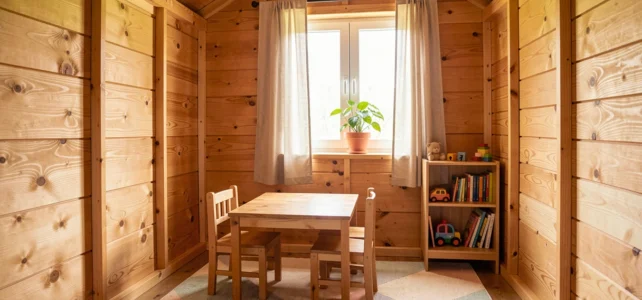
A small house is distinguished from a traditional dwelling by its reduced size, which requires thinking about each piece of equipment in relation to the available space and actual use. Choosing the right equipment for a small house means balancing comfort, clutter, and durability, without replicating the layout habits of a large home.
Dimensional constraints and choosing furniture suitable for a small house
In a compact living space, a standard three-seater sofa takes up a disproportionate amount of floor area. The first instinct is to measure each area before any purchase, including the necessary clearances for movement.
Multi-functional furniture addresses part of the problem. A bench with storage replaces both a sofa and a storage unit. A foldable table fixed to the wall frees up space during the day and provides a real dining surface in the evening.
To go further in choosing furniture, consulting the equipment on La Maisonnette De Barbichounette allows you to find solutions designed for this type of space.
- Favor stackable or folding seating, which can be stored when not in use, rather than bulky fixed armchairs.
- Choose vertical storage (wall shelves, narrow columns) to utilize ceiling height without encroaching on living space.
- Opt for wheeled furniture in the kitchen or office, movable according to the current activity.
A well-chosen multifunctional piece of furniture replaces two traditional pieces and frees up circulation space that radically changes daily comfort.
Lighting and ventilation: two often underestimated aspects
Lighting transforms the perception of a small house much more than decoration. In a small volume, a single light source creates shadow areas that visually shrink the room. Multiplying light points, even modest ones, corrects this effect.
Three levels of lighting are sufficient in most configurations: a ceiling light for general illumination, adjustable spotlights for work surfaces (kitchen, office), and a variable-intensity lamp for the relaxation corner. Warm temperature bulbs (around 2700 K) make small spaces more welcoming than cool tones.
Ventilation and indoor air quality
A compact house concentrates humidity and cooking odors in just a few minutes. Without an air renewal system, condensation settles on windows and walls, degrading finishes and respiratory comfort.
A properly sized single-flow ventilation system ensures sufficient renewal without consuming much energy. In configurations where installing a ventilation system is complicated (lack of attic, lightweight structure), an extractor fan in the kitchen and bathroom is a functional minimum.
For windows, a tilt-and-turn glazing offers controlled ventilation without fully opening, preventing rain or insect entry while renewing the air.
Kitchen and bathroom: compact equipment without sacrificing use
The kitchen of a small house cannot accommodate a full-height refrigerator, a standard dishwasher, and a built-in oven. The choice depends on the actual frequency of use of each appliance.
A tabletop refrigerator (height under the work surface) meets the needs of two people. Two-burner induction cooktops advantageously replace a four-burner gas stove: they heat faster, take up less space, and are easy to clean. A compact microwave oven avoids duplicating appliances.
In a compact kitchen, each appliance must justify its floor space. A toaster, a kettle, and a multifunction robot cover most preparations without cluttering the work surface.
Bathroom: the choice between a bathtub and a shower
In a small house, a walk-in shower almost always prevails over a bathtub. It uses less water, occupies less space, and simplifies maintenance. Extra-flat shower trays of reduced width fit into spaces where a bathtub would be impossible to install.
For faucets, a thermostatic mixer limits hot water waste and avoids unpleasant temperature fluctuations. A wall-mounted sink cabinet frees up the floor and creates a sense of volume, in addition to facilitating cleaning.
Heating a small house: heat pump or electric radiator
The choice of heating mode depends on the insulation of the small house and its use (primary residence, seasonal rental, office). A small volume heats up quickly, which can make an oversized system counterproductive.
Electric inertia radiators offer a good compromise for small spaces: they provide consistent warmth and require neither piping nor an outdoor unit. Their installation cost remains modest.
Air-to-air heat pumps are still relevant for a house inhabited all year round, as they also provide cooling in summer. The European market confirms a clear recovery in residential heat pump sales, indicating that the technology is becoming more accessible.
- Occasionally used small house (weekend, rental): an electric inertia radiator or a radiant panel is sufficient, with a timer to preheat before arrival.
- Continuously inhabited small house: an air-to-air heat pump provides better long-term efficiency, despite a higher initial investment.
- Poorly insulated small house: before any heating purchase, reinforcing insulation (windows, attic, walls) remains the priority, as no equipment compensates for a failing thermal envelope.
Accessibility standards to consider
New housing in France must meet circulation and equipment height requirements that directly influence the choice of furniture and installations. Wider doors, accessible-height outlets, walk-in showers: these regulatory constraints lead to solutions that improve comfort for all occupants, not just those with reduced mobility.
For an existing small house, MaPrimeAdapt’ has been funding adaptation work since January 2024, but only for the primary residence. If the small house is used as a seasonal rental or outbuilding, these aids do not apply, which alters the budget to be planned.
Designing a comfortable small house relies less on the quantity of equipment than on their suitability for the space and daily use. A well-placed compact appliance, thoughtful lighting, and appropriate ventilation change the perceived comfort more than a catalog of additional furniture.