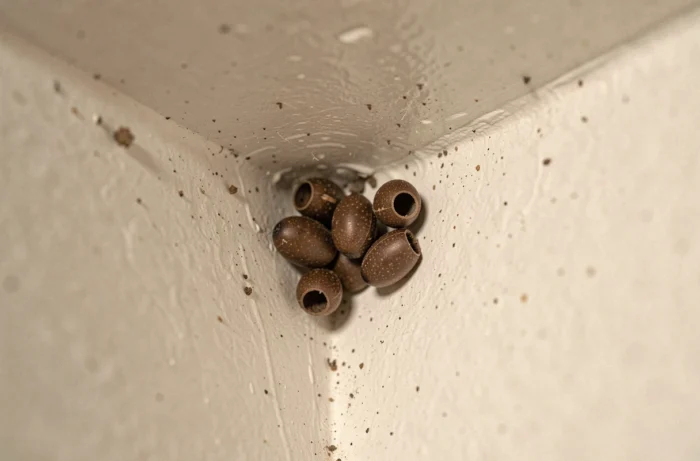
Small brown, oval capsules stuck to a wall or hanging from the ceiling of the bathroom: the discovery is always surprising. These grains that resemble blackened puffed rice are neither insect droppings nor cockroach eggs. They are fly pupae, the stage just before the adult winged insect hatches.
Their presence on the walls or ceiling of your home indicates an active breeding site somewhere in the dwelling, and rarely where one would expect to find it first.
Fly pupae far from the kitchen: the sign of a hidden breeding site within the structure
When pupae are found near the trash can or compost, the connection is obvious. The situation becomes more confusing when these capsules appear in a hallway, a bedroom, or the ceiling of a room without a visible food source.
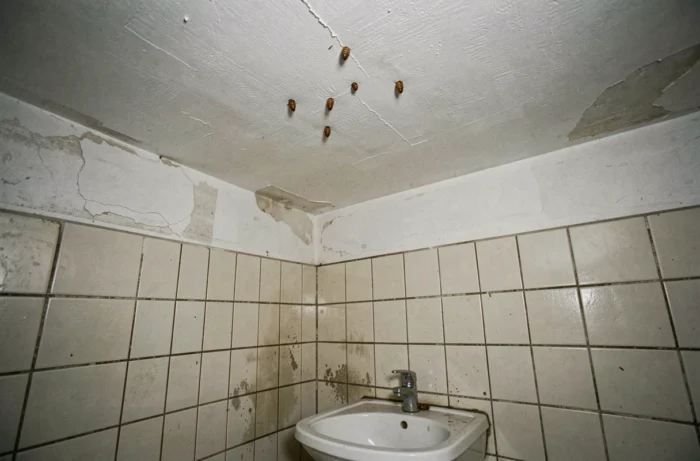
In this case, the larvae have migrated from a breeding site hidden within the structure of the home. Maggots can move several meters before transforming into pupae. They seek a dry, elevated place to complete their metamorphosis, which explains their presence on walls and ceilings.
The areas to inspect first are not the ones you might imagine. You can learn more on Inside Out’s site to distinguish between a simple nuisance and a true infestation, but in any case, the source is often found in corners that are not easily accessible on a daily basis:
- The roller shutter boxes, where a dead bird or an abandoned nest can serve as a pantry for larvae for weeks without anyone noticing.
- The false ceilings and technical ducts, which trap moisture and sometimes organic waste forgotten during renovations.
- The spaces behind baseboards and under floating floors, where food residues or a dead rodent decompose out of sight.
If pupae appear far from any visible food source, look for an animal carcass or organic waste embedded in a closed space. This is the most common cause of localized infestations on walls.
Eliminating fly pupae on walls: the correct intervention sequence
The common reflex is to spray insecticide on the visible pupae. This approach misses the target. The hard shell of the pupa protects the nymph inside: most household products have no effect on this stage of the cycle.
The top priority is to find and eliminate the organic source, not to treat the pupae themselves. Without decaying matter, there is no breeding, no larvae, and the pupae already present will not be replaced.
Remove pupae mechanically
Vacuum the walls and ceiling to collect all visible pupae. Empty the vacuum bag or bin into a sealed trash bag, then dispose of it outside immediately. If any pupae remain, a damp cloth with a little white vinegar is enough to dislodge them.
Identify and clean the source of the infestation
Methodically inspect the areas listed above. Open the shutter boxes, check under heavy furniture, pull out kitchen appliances. A dirty trash can or a clogged drain is enough to maintain a continuous breeding cycle.
Clean the identified area with boiling water. The heat destroys eggs and young larvae much more effectively than a chemical spray. For drains, pour boiling water directly into the trap, then scrub the inside if accessible.
Long-term prevention against flies inside the house
Once the breeding site is eliminated, it is necessary to prevent adult flies from recolonizing the same areas. Have you ever noticed that flies always return to the same spots year after year? They leave chemical traces (pheromones) that attract subsequent generations to the same breeding sites.
Cleaning the area is not enough if the access points remain open. After cleaning, seal cracks around ducts, install screens on windows near at-risk areas, and check the seals of shutter boxes.
For the kitchen, the basic rule remains the management of organic waste. Take out the trash every day in summer, especially if it contains meat or fish. An airtight lid significantly reduces the attractiveness of the trash can for flies looking for breeding sites.

When to call a pest control professional
Most fly pupae infestations can be resolved in a few days with methodical cleaning. However, two situations justify the intervention of a specialist.
The first: you have cleaned, vacuumed, and inspected all accessible areas, and new pupae reappear after two weeks. This means that the breeding site is in a location you cannot reach (inside a wall, crawl space, chimney flue).
The second: the infestation is massive, with dozens of pupae in several rooms. A professional has inspection tools (endoscopic camera, moisture detector) and biocidal products reserved for certified technicians, which act on the entire life cycle of the fly.
Before contacting a service provider, photograph the pupae and note their exact location in the house. This information allows the technician to target their diagnosis and avoid unnecessarily extensive chemical treatment.
Fly pupae on your walls always tell the same story: somewhere, decaying organic matter fuels a breeding cycle. Find this source, eliminate it, and the walls will be clean again in a few days. The rest, screens, waste management, airtight seals, prevents the problem from returning the following season.