In Metz and its neighboring municipalities, car washing is practiced within a regulatory framework that has tightened in recent years. Between seasonal water restrictions, display obligations for stations, and the prohibition of washing on public roads, Metz motorists must navigate rules that directly influence their choice of location and cleaning method.
Car Wash in Metz: What the Water Regulations Change in 2026
Since the summer of 2026, car wash stations in Moselle and neighboring departments are subject to enhanced display obligations. Operators must make visible the water restriction measures as soon as the alert level is reached, so that each user knows immediately whether washing is allowed or not.
This evolution has concrete consequences. During drought episodes, some stations simply close. Others remain open thanks to a derogatory regime. Stations equipped with water recycling systems or using only rainwater collected from roofs can, under certain conditions, request a waiver from the prefecture to remain operational.
For a motorist in Metz, this distinction is crucial. Choosing a station with a recycling circuit ensures access to washing even during restrictions, where a traditional center connected to the drinking water network risks temporary closure. Local brands like Clean Auto provide information on available equipment in the Metz urban area.
Home Washing in Metz: A Regulated and Risky Practice
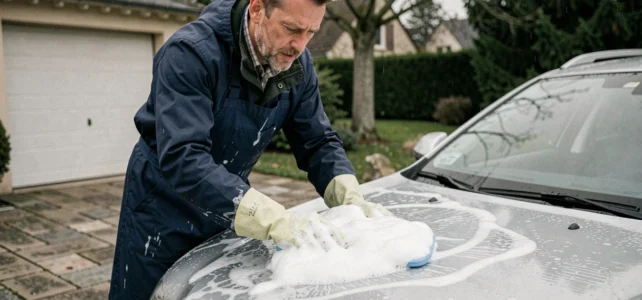
Washing your car in front of your home, in a courtyard, or in a parking lot may seem trivial. French regulations say otherwise. Washing on public roads or any surface leading to runoff into the stormwater system is prohibited, regardless of water restriction periods.
The reason is environmental. Wash water loaded with hydrocarbons, brake residues, and surfactants must not reach watercourses without treatment. In Metz, where the Moselle and Seille rivers cross the urban area, this issue of runoff is monitored.
Field reports vary on this point: some municipalities in the Metz urban area actively issue fines, while others are content with preventive signage. The legal risk exists in all cases. For compliant home cleaning, one would need a permeable surface (lawn, gravel) and a non-polluting product, which significantly limits options.
High-Pressure Car Wash or Hand Car Cleaning: Selection Criteria in Metz
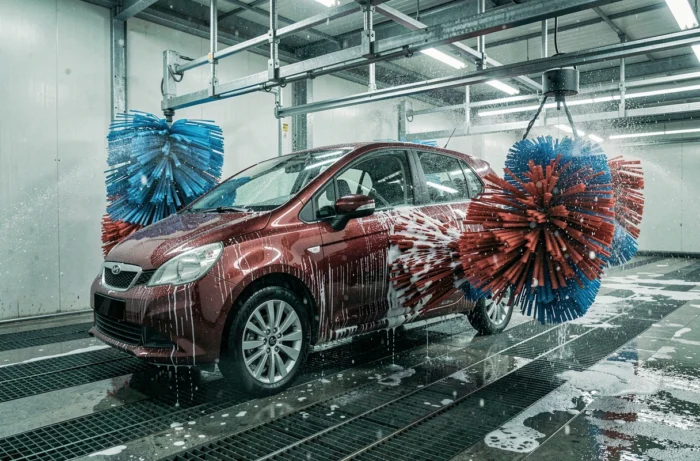
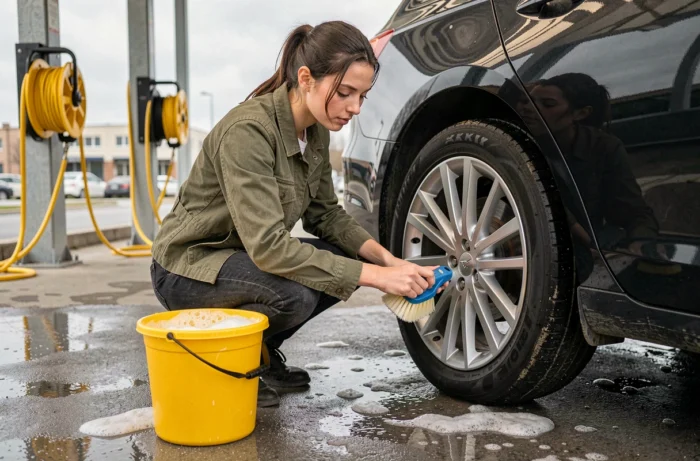
The Metz urban area offers two main categories of washing: self-service stations (rollers, high pressure) and hand cleaning centers, sometimes referred to as detailing centers. The choice depends on three concrete parameters.
- Washing frequency: a motorist who washes their car every two weeks will prefer a high-pressure station for the time/cost ratio. A more thorough quarterly cleaning justifies a visit to a manual center.
- The condition of the bodywork: newer vehicles with fragile paint (single-layer varnish, matte colors) do not handle rollers well. Hand washing with suitable products better preserves the varnish over time.
- The treatment of the interior: self-service stations are limited to vacuuming and air fresheners. Cleaning fabric or leather seats, eliminating stubborn odors, or treating interior plastics requires manual intervention with specific products.
In Woippy, Montigny-lès-Metz, or Moulins-lès-Metz, several providers offer intermediate packages. Interior cleaning is often the most underestimated service by motorists, even though it has the most impact on daily comfort and the resale value of the vehicle.
Car Wash Products and Recycled Water: What Really Protects the Bodywork
Decree No. 2024-796 of July 12, 2024, and the order of the same day have revamped the rules for using rainwater in France. For car wash stations, this opens the possibility of using collected rainwater, provided that a precise sanitary framework is respected.
From the perspective of bodywork, recycled or rainwater has less limescale than tap water. The white marks after drying, common with hard water, are significantly reduced. This is a concrete advantage for motorists who do not dry their vehicle immediately after washing.
On the product side, the distinction between neutral pH shampoo and standard detergent matters more than one might think. A product that is too alkaline attacks protective waxes and accelerates the dulling of the varnish. Professional cleaning centers around Metz generally use pH-controlled ranges, but nothing prevents one from asking the question before entrusting their vehicle.
Post-wash protection (natural wax, ceramic treatment) extends the interval between two cleanings. A well-applied ceramic protection reduces the adhesion of dirt and facilitates each subsequent wash, which also decreases water consumption in the long term.
Choosing a car wash center in Metz is not just about geographical proximity. The regulatory compliance of the station, the type of water used, and the products applied to the bodywork are all criteria that determine the quality of the result and the durability of the finish. Motorists who regularly drive in the Metz urban area should identify a reliable provider rather than alternating between several stations at random during their trips.