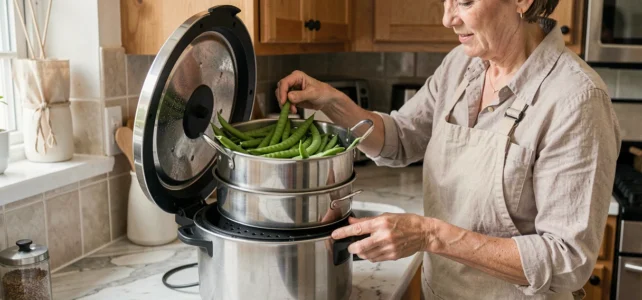
Green beans cooked in a pressure cooker lose their crunch and color much faster than beans blanched in water. The pressure alters the cellular structure of the vegetable: the walls soften more, and reheating amplifies this phenomenon if the chosen method is not suitable. Knowing how to reheat these beans without turning them into mush requires understanding what happens inside the vegetable after pressure cooking.
Why pressure-cooked green beans react differently to reheating
The pressure cooker cooks green beans at a higher temperature than a regular pot, thanks to the steam under pressure. The cellulose and pectin fibers break down more deeply, resulting in beans that are more tender but also more fragile.
During reheating, this structural fragility presents a concrete problem: too long in the pan or microwave is enough to turn the texture mushy. The color turns khaki, and the flavor flattens. The vegetable has already undergone intense thermal treatment, and every additional minute of heat accelerates degradation.
The strategy is therefore to reheat quickly, at a controlled temperature, by adding an element that compensates for the loss of texture or flavor. To delve deeper into the basics, the question of reheating green beans already cooked in the pressure cooker deserves a detour, particularly regarding food safety.
Temperature and reheating duration: the thresholds to respect
Before choosing a method, a food safety point must be addressed. Recommendations aligned with USDA guidelines set the minimum internal reheating temperature at 74 °C at the center of the dish. This threshold applies to all vegetable leftovers, including green beans.
Another guideline to keep in mind: cooked green beans can be stored in the refrigerator for 3 to 4 days maximum at 4 °C, provided they were refrigerated within two hours of cooking. Beyond that, the bacterial risk increases, and reheating is not sufficient to make the dish safe.
A final often-overlooked point: it is recommended to only reheat leftovers once. Each cooling-reheating cycle brings the beans back into the thermal danger zone (between about 4 °C and 60 °C), which promotes bacterial growth. Only take out the portion to consume and leave the rest in the fridge.
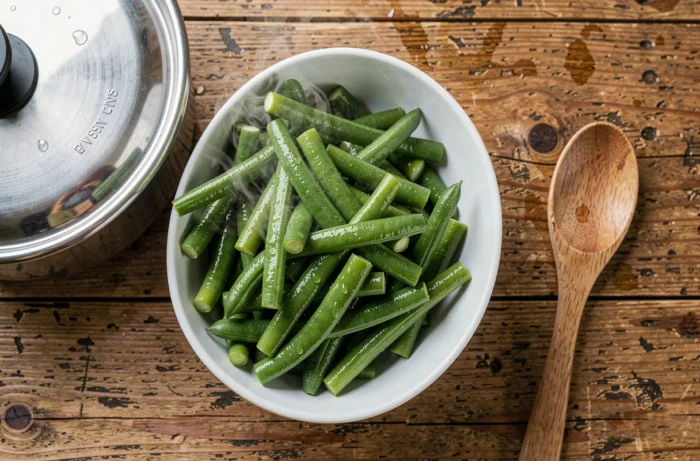
Reheating green beans in a pan: the method that best preserves texture
The pan remains the best option for restoring character to green beans already cooked under pressure. Direct, dry heat causes a slight surface reaction that compensates for the initial softening.
Step-by-step technique
- Take the beans out of the refrigerator about fifteen minutes before reheating. A cold vegetable in a hot pan releases too much water at once and ends up boiling instead of sautéing.
- Heat a drizzle of olive oil (or butter) in a large pan over medium-high heat. The space between the beans is crucial: if they are crowded, they release their water and the texture becomes soft.
- Arrange the beans in a single layer. Leave them without stirring for one to two minutes to allow for slight browning. This browning adds a grilled flavor that masks the typical blandness of reheating.
- Salt at the end of cooking, and optionally add garlic, shallots, or a few sesame seeds. The total reheating time should not exceed three to four minutes.
This method also works in a wok, with the advantage of even more concentrated heat. The result resembles an Asian stir-fry, far from cafeteria leftovers.
Alternatives to hot reheating: green bean salad
If the beans were cooked in the pressure cooker the day before, the simplest solution to avoid any thermal overexposure is to not reheat them at all. A green bean salad can be prepared directly with cold beans taken from the refrigerator.
The seasoning compensates for what heat can no longer do. A vinaigrette made with walnut oil, apple cider vinegar, and a touch of mustard enhances the flavor better than a second trip to the pot. Sliced red onions, walnut halves, or crumbled goat cheese can transform a leftover into a complete dish.
Serving the beans at room temperature (taken out of the fridge twenty minutes before) improves the perception of taste. A vegetable that is too cold numbs the taste buds, while a warm vegetable releases its aromas better.
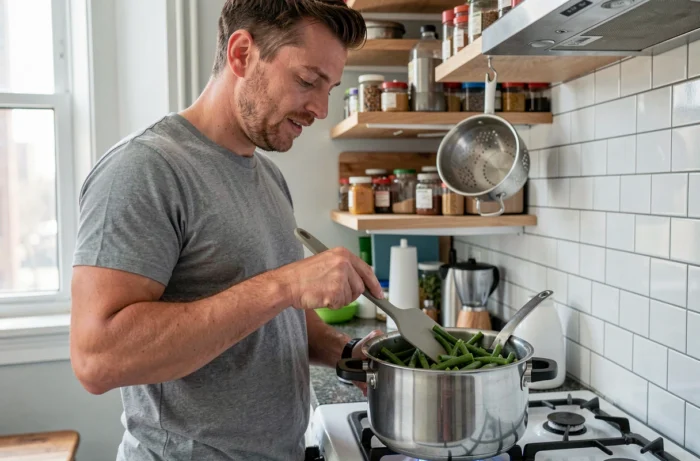
Microwave and saucepan: two backup options to use with caution
The microwave
The microwave reheats quickly but unevenly. Pressure-cooked green beans do not tolerate localized hotspots well. To limit damage, cover the container with plastic wrap or a glass lid, add a tablespoon of water to create a steaming effect, and heat in short intervals of thirty seconds, stirring between each cycle.
Acceptable result, never ideal. The texture remains softer than in the pan, and the green color fades more than with dry contact reheating.
The saucepan with a bit of water
Reheating in a saucepan with boiling water works, provided the time is limited to two minutes maximum. The water maintains a uniform temperature, but it adds moisture to a vegetable that does not need it. Drain immediately after reheating.
This method is especially suitable when the green beans will be topped with a sauce (herb butter, soy sauce, garlic cream). The sauce masks the loss of crunch and keeps the dish flavorful.
What really changes the taste at serving time
Reheating is only half the job. The final seasoning often makes more of a difference than the chosen thermal method. A green bean reheated in the pan but served plain remains bland. The same bean with a knob of brown butter, a pinch of fleur de sel, and a twist of pepper becomes a convincing side dish.
The fat added at the end of reheating coats the surface of the vegetable and compensates for the texture loss associated with pressure cooking. Butter, olive oil, toasted sesame oil: each fat steers the dish in a different direction. A squeeze of lemon just before serving adds acidity and awakens beans that have spent two days in the fridge.
The perfect reheating of green beans cooked in a pressure cooker depends on three variables: a quick method by dry contact, adherence to the 74 °C threshold for safety, and a seasoning that compensates for what pressure has taken from the vegetable.