
The cozy reducer is a piece of foam or padded fabric placed inside the shell to support the body of a newborn whose shape does not yet fill the seat. Its role is to fill the space between the harness, the side walls, and the small size of the infant.
Removing it too early exposes the baby to poor head and torso support. Keeping it too long compresses the baby and generates discomfort, sweating, or even systematic crying during every trip.
Adjusting the cozy harness: the real signal for removal
Most parents rely on age or weight to decide when to remove it. These indicators can be misleading. A three-month-old baby can be taller than another five-month-old, and the reliable criterion is the adjustment of the harness at the shoulder level.
The cozy harness should sit flush against the shoulders, without rising from the bottom of the backrest or pulling upwards. When the reducer is still in place and the straps begin to compress the shoulders or create a fold at the collarbones, the reducer cushion prevents the harness from fulfilling its function. In this case, removing it improves both comfort and safety.
A parent wondering when to remove the cozy reducer should first check this specific point: flat straps on the shoulders, no excessive lateral play at the head, and the baby not exceeding the top of the shell.
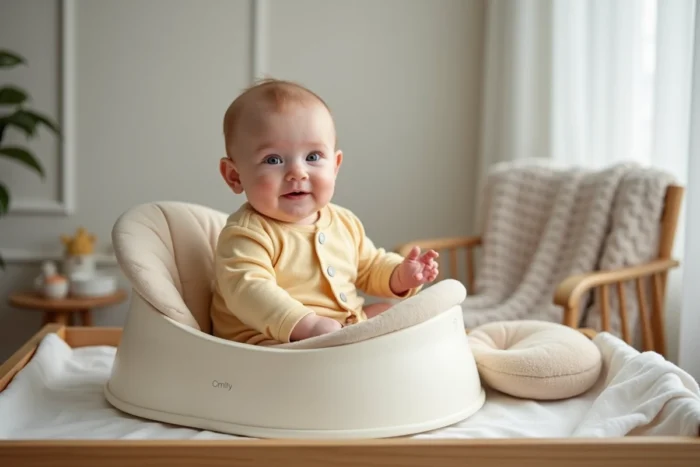
Baby size and shell limits: read the manufacturer’s manual
Each cozy is approved for a specific size range (and sometimes weight). Models compliant with the i-Size standard are measured in centimeters, not kilograms. The reducer is designed for the very first centimeters of this range, often starting from 40 cm.
When the baby’s head reaches the top of the reducer or their shoulders exceed the lateral edges of the cushion, it must be removed. If left in place, the baby’s back ends up in a too-arched position, which accentuates the “sitting” effect that several parents describe as uncomfortable for the infant.
The trap of the “too hollow” cozy after removal
A common concern arises: once the reducer is removed, the shell seems too hollow and the baby’s head is no longer supported laterally. This is a real issue with some older models, especially those approved under the old ECE R44 standard.
Never fill this gap with a rolled towel or a pillowcase. Any added element that does not come from the manufacturer has not been crash-tested and can alter the behavior of the harness in the event of a collision. If the lateral support of the head is insufficient after removing the reducer, the shell is probably no longer suitable for your child’s size.
Cozy reducer and i-Size standard: what the regulations stipulate
The regulations do not set a specific age for removing the reducer. The i-Size standard imposes size thresholds for rear-facing use (some models allow rear-facing until 105 cm), but the removal of the reducer is subject to the manufacturer’s instructions, not a legal text.
A point often overlooked: since September 1, 2024, seats compliant with the old ECE R44 standard are no longer allowed to be sold new in the European Union. Their use remains legal if the seat is already in circulation. On these older models, the manuals are sometimes brief and do not always specify when to remove the reducer.
- On an i-Size cozy: the reducer is intended for the lowest sizes of the approval range (often around 40 to 50-55 cm). Check the manual for the exact removal size.
- On an ECE R44 cozy: the manual may indicate a weight (often around 3.5 to 4.5 kg) or may not indicate anything at all. Rely on the harness adjustment.
- On a second-hand or borrowed cozy: if the manual is missing, contact the manufacturer with the model number. Do not remove the reducer at random.
Thermal comfort and duration in the cozy: two underestimated factors
The reducer adds a layer of foam between the baby and the shell. In summer or in a vehicle parked in the sun, this extra thickness makes the infant sweat. Many parents notice that their baby cries as soon as they are placed in the cozy, then calms down instantly once the reducer is removed.
A baby sweating after a short trip is a signal to take seriously. This does not necessarily mean that the reducer should be removed permanently: it can be taken out for hot trips and put back in for cold trips, provided that the harness is properly readjusted each time.
The duration spent in the cozy also plays a role. A twenty-minute trip does not impose the same constraints as a two-hour trip. The longer the time spent, the more the comfort of the seat matters, and the more a reducer that has become too small becomes problematic for the baby’s posture.
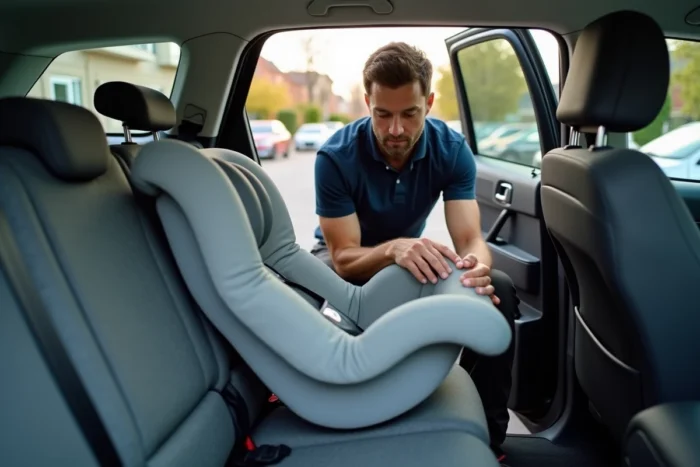
When the cozy itself is no longer enough
Removing the reducer is a step, not an end. A cozy has a limited lifespan: when the top of the baby’s head exceeds the upper edge of the shell, the entire seat must be changed, reducer or not. This criterion is more reliable than the maximum weight indicated, as it is the protection of the head in the event of a rear impact that is at stake.
The transition to the next group car seat (often referred to as a “2nd age” seat) occurs when the shell is exceeded in size. On i-Size models, this can happen well after the first months if the baby is small, or as early as four to five months for larger babies.
The cozy reducer is just a temporary adaptation element. Its duration of use varies from child to child, sometimes only a few weeks. The right time to remove it is when the harness properly secures the shoulders without the cushion, when the head remains below the edge of the shell, and when the baby shows no signs of discomfort related to compression. Everything else (age, weight, comparison with other children) is secondary.